


That burning feeling after swimming can quickly make you ask, can you get a UTI from a swimming pool
It’s a common concern, especially if you’ve been in a wet swimsuit and something doesn’t feel right.
The confusion comes from not knowing what actually causes the problem. In most cases, it’s not the pool itself, but factors around swimming that increase risk.
In this guide, you’ll learn what really leads to UTIs, when swimming can make symptoms worse, and how to lower your chances next time.
Key Takeaways
- A swimming pool usually does not directly cause a UTI, but certain habits around swimming can raise your risk.
- Wet swimsuits, irritation, and poor hygiene are bigger triggers than clean pool water itself.
- Properly maintained pools are much less likely to cause problems, while dirty or poorly balanced pools can increase irritation or infection risk.
- Chlorine helps kill germs, but pool chemicals can still irritate sensitive skin and make symptoms feel similar to a UTI.
- Swimming with an existing UTI may make discomfort worse, especially if you already have burning, pressure, or irritation.
- Simple habits can lower your risk: change out of wet swimwear, rinse off, stay hydrated, avoid holding urine, and choose clean pools.
Can You Get a UTI From a Pool?
Usually, not directly.
A clean, well-maintained pool is not a common direct cause of a UTI. Most UTIs happen when bacteria get into the urinary tract, not just from being in pool water. But swimming can still play a part if the water is not clean, you stay in a wet swimsuit too long, or the area gets irritated afterward.
That is why some people feel symptoms after swimming and assume the pool caused the infection. In reality, the pool itself may not be the exact cause, but the overall situation around swimming can raise your risk or make things feel worse.
Can You Get a UTI From a Chlorinated Pool?
Usually not. A properly chlorinated pool is meant to lower germ levels, so it is less likely to directly cause a UTI.
But chlorine and other pool chemicals can irritate sensitive skin and the urethral area, which can feel similar to a UTI at first.
Can You Get a UTI From a Public Pool?
You can, but not simply because it is public. The bigger issue is whether the pool is clean and properly maintained.
If hygiene is poor, chlorine levels are off, or the water is contaminated, your risk of irritation or infection can go up.
Can You Get a UTI From a Hot Tub?
A hot tub is not a common direct cause of a UTI either, but it can still be a problem if it is not cleaned properly. Warm water can also irritate the area, and people sometimes confuse that irritation with a UTI. Hot tubs are more often linked to skin issues than UTIs.
📖 You May Also Like This “Swimming Pool” Article: What Does Stabilizer Do for a Pool? Full Guide
Can You Swim in a Pool With a UTI?
Yes, you usually can.
But that does not mean it is a good idea.
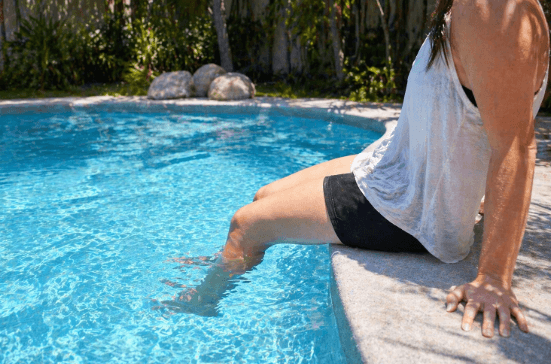
If you already have a UTI, swimming can make things feel worse. Chlorine, pool chemicals, and sitting in a wet swimsuit may add more irritation when you are already dealing with burning, pressure, or the constant urge to pee.
So the better question is not just, “Can you swim?”
It is, “Will swimming make me more uncomfortable?”
In many cases, yes.
If your symptoms are mild, you may still go in the pool. But if you already feel sore, irritated, or uncomfortable, it is usually better to skip it and let your body settle down first.
You should be more careful if:
- you have strong burning
- you see blood in your urine
- you have pelvic pain
- you feel feverish or sick
- you are just starting treatment
In those cases, resting and dealing with the UTI first makes more sense than getting in the pool.
📖 You May Also Like This “Swimming Pool” Article: How to Maintain a Saltwater Pool & the Cost?
How to Prevent a UTI From Swimming
You do not need to stop swimming.
You just need to make a few smart habits part of the routine.
The biggest things that help are keeping the pool clean, getting out of wet swimwear quickly, and reducing irritation around the urinary area. The American Urology Association’s patient guidance specifically recommends asking how the pool is maintained and changing out of wet bathing suits to lower your chances of getting a UTI.

Here are the main steps:
- Choose a clean, well-maintained pool. A properly maintained pool is less likely to create the kind of hygiene problems that raise risk.
- Change out of a wet swimsuit as soon as you can. Sitting in wet fabric for too long can trap moisture and irritate the area.
- Rinse off after swimming. This helps wash away chlorine, sweat, and anything else sitting on your skin.
- Do not hold your pee for too long. Emptying your bladder regularly is a basic habit that helps lower UTI risk.
- Stay hydrated. Drinking enough water helps you pee normally and flush bacteria out of the urinary tract.
- Be careful if you are already irritated. Sometimes burning or discomfort after swimming is irritation, not a true UTI. MedlinePlus notes that burning, pressure, and urgency can also happen with noninfectious bladder irritation, and chemical sensitivity can irritate the urethra too.
A simple example:
If you swim, sit around in a damp swimsuit for two hours, and already have sensitive skin, that is a much worse setup than swimming for 30 minutes, showering off, and changing into dry clothes right away.
That is really the goal here.
Not fear.
Just fewer things that make irritation or infection more likely.