

A saltwater pool isn’t as “low maintenance” as it sounds once you start dealing with cloudy water or weak chlorine. That’s where knowing how to maintain a saltwater pool makes a big difference.
The issue usually comes from missing a few simple checks, not the system itself.
Skip them, and problems build up fast.
In this guide, you’ll learn how to maintain a saltwater pool step by step, what it actually costs, and how to keep it clean without extra hassle.
Key Takeaways
- A saltwater pool still needs regular maintenance, even though it produces chlorine differently than a traditional pool.
- Most saltwater pool problems come from poor water balance, low salt, dirty filters, or scale buildup on the salt cell.
- The basic maintenance routine is simple: test the water, adjust the levels, clean the pool, and keep water circulating.
- Check salt level, pH, chlorine, and alkalinity every week to keep the system producing chlorine properly.
- The salt cell needs regular cleaning because buildup can reduce chlorine output and lead to cloudy water.
- Saltwater pools often cost less in chemicals, but you still need to budget for electricity, salt, chemical balancing, and a future salt cell replacement.
What Maintenance Does a Saltwater Pool Need?
Saltwater pools feel easier, but they still need regular care. You’re not adding chlorine manually, but the system still has to produce and maintain it properly.
Here’s what you actually need to stay on top of:
- Check salt levels so the system can generate chlorine correctly
- Test and balance pH, chlorine, and alkalinity weekly
- Clean the salt cell to prevent scale buildup
- Run the pump daily for proper circulation
- Remove debris and brush surfaces to avoid buildup
Think of it this way: a saltwater pool manages chlorine for you, but you still manage the system.
Is a Saltwater Pool Easier or Harder to Maintain?
This is where expectations usually don’t match reality.
Saltwater pools are easier in daily use because you’re not constantly adding chlorine. The system handles that automatically. But they’re not “no maintenance.”
You still need to monitor water balance and keep the system clean. If you ignore it, problems build up quietly, like scale on the salt cell or weak chlorine production.
So overall:
- Easier for day-to-day handling
- Slightly more technical when issues show up
Is a Saltwater Pool Cheaper to Maintain?
Saltwater pools usually cost less over time, but not always upfront.
- You save money on buying chlorine regularly
- But you may spend more on salt cell maintenance or replacement
- Electricity costs can be slightly higher due to system use
- Long-term, costs balance out depending on usage and care
Simple answer: cheaper in chemicals, slightly higher in equipment care.
📖 You May Also Like This “Swimming Pool” Article: What Does Stabilizer Do for a Pool? Full Guide
How to Maintain a Saltwater Pool
This is where most people get stuck. The system feels automatic… until the water turns cloudy or chlorine drops.
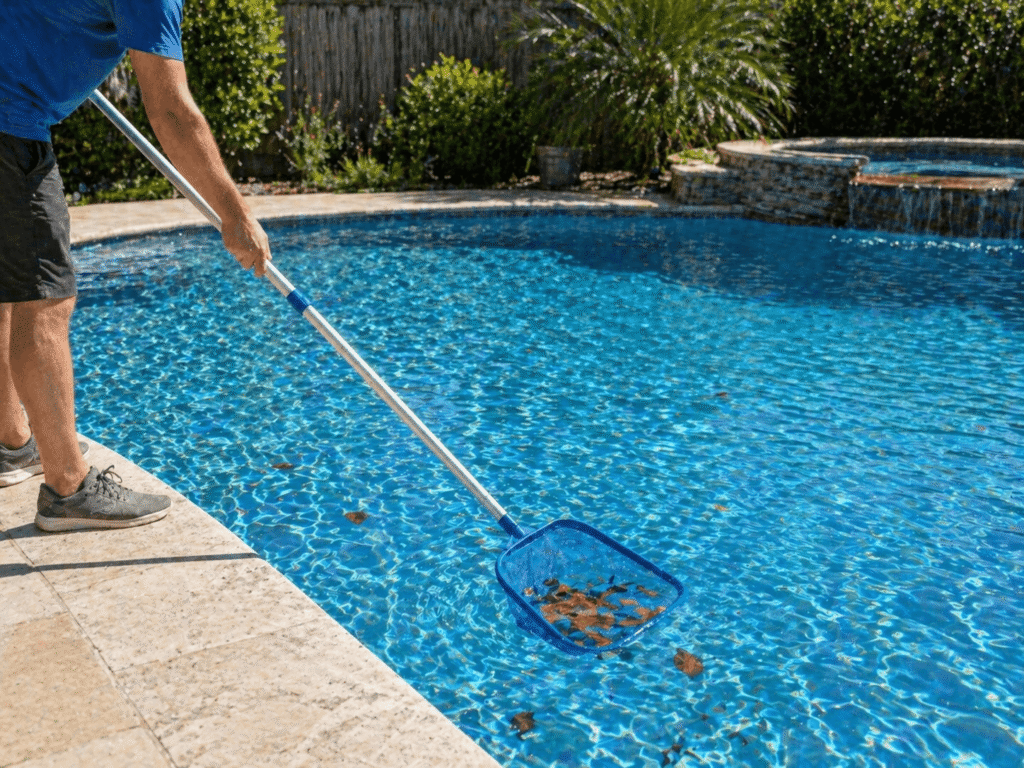
The key is a simple weekly routine that keeps everything stable.
- Test salt level, chlorine, pH, and alkalinity at least once a week
- Keep salt within the recommended range for your generator
- Run the pump 8–12 hours daily for proper circulation
- Inspect and clean the salt cell to avoid scale buildup
- Remove debris and brush surfaces to prevent hidden growth
- Backwash or clean the filter regularly
You’re not doing more work. You’re just keeping the system running the way it should.
How to Maintain Saltwater Pool Yourself? (DIY)
You don’t need special skills to handle this yourself. You just need consistency.
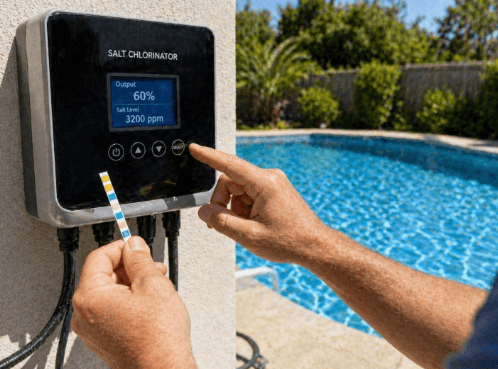
- Use a test kit or strips to check water balance weekly
- Add salt only when levels drop below the required range
- Clean the salt cell every few months depending on the buildup
- Adjust the system’s chlorine output setting based on usage
- Keep an eye on water clarity and fix issues early
Example: if your pool looks slightly dull, don’t wait. Check levels and adjust right away before it turns into a bigger problem.
How Much Does It Cost to Maintain a Saltwater Pool?
This is where expectations matter.
Saltwater pools save money on chemicals, but you still have ongoing costs.
- Salt: low cost, usually added a few times a year
- Electricity: to run the pump and salt system
- Chemicals: still needed for pH and balance
- Salt cell replacement: every 3–7 years (biggest cost)
On average, you’re looking at:
- Monthly cost: $20–$50 for basic upkeep
- Long-term cost: higher when replacing the salt cell system
Simple breakdown:
- Lower daily chemical cost
- Occasional equipment expense
Overall, it’s predictable and manageable if you stay consistent with maintenance.
📖 You May Also Like This “Swimming Pool” Article: Can You Get a UTI From a Swimming Pool?
How to Maintain an Above-Ground Saltwater Pool
Above-ground pools need a bit more attention because circulation isn’t as strong as in-ground setups.
- Run the pump longer (10–12 hours daily) to avoid stagnant water
- Brush walls and floor more often since buildup forms faster
- Check salt and chlorine levels weekly to keep output steady
- Clean the filter frequently because smaller systems clog faster
- Watch corners and seams where algae can start easily
These pools work fine, but consistency matters more here.
How to Maintain an Intex Saltwater Pool
Intex systems are simple, but they need regular checks to avoid sudden issues.
- Monitor the salt system output and error codes regularly
- Clean the salt cell often since buildup happens quicker
- Keep water balanced, especially pH and chlorine levels
- Run the system daily, even if the pool isn’t being used
- Replace filters more often due to smaller capacity
Think of it as a lighter system that needs closer monitoring, not less care.
How to Maintain a Small Saltwater Pool
Small pools are easier to manage, but water balance can change quickly.
- Test water more often since small volume shifts faster
- Adjust salt and chemicals in smaller, careful amounts
- Run the pump daily, even for shorter cycles
- Remove debris quickly to avoid rapid contamination
- Keep the salt system calibrated for the pool size
Small pool = small margin for error. Stay consistent, and it stays easy.