

Seeing bees and wasps around your home can make your patio, cookout, or backyard feel stressful fast.
It may start with one near your drink, then more near the trash, food, or deck.
The good part is, you don’t need to harm them to keep them away.
You just need to remove what attracts them first, then use simple natural repellents.
In this guide, you’ll learn how to repel bees and wasps naturally, what works, what to skip, and how to make your yard less inviting.
Key Takeaways
- Bees and wasps are usually attracted by food, sugar, trash, or standing water, not random activity around your home.
- Removing what attracts them first is the most effective way to reduce bee and wasp activity naturally.
- Peppermint oil, clove, vinegar, and lemongrass can help create a natural scent barrier around patios, doors, and outdoor seating areas.
- Plants like peppermint, marigold, citronella, and lavender may help keep bees and wasps away from key outdoor spots.
- DIY natural sprays work best for targeted areas, but they won’t fully solve the problem if attractants are still present.
- If you notice nests, repeated swarms, or constant activity, natural methods alone may not be enough to stop the issue completely.
Why Bees and Wasps Keep Coming Back
Bees and wasps do not usually show up for no reason. If they keep returning to your patio, deck, garden, trash area, or doorway, they are probably finding something useful there. That could be food, water, shelter, or a nesting spot.
Common Things That Attract Bees and Wasps
- Sweet drinks and spills: Soda, juice, sports drinks, and sticky spills can attract bees and wasps quickly. Even a small splash on a table or deck can keep them returning.
- Food left outside: Wasps are especially drawn to protein and sugar, so picnic food, grilled meat, fruit, and desserts can make outdoor meals harder to enjoy.
- Open trash bins: Food scraps, drink cans, fruit peels, and sticky packaging create a strong scent trail. If the lid is loose, insects can keep coming back.
- Standing water: Buckets, plant saucers, clogged drains, birdbaths, and damp areas give insects a reason to stay nearby, especially in dry weather.
- Hidden nesting spots: Wall gaps, roof edges, sheds, deck railings, and fence posts can become active areas if wasps begin building nearby.
Example: If wasps keep circling your trash bin every afternoon, spraying the area may help for a short time. But if the bin still smells like food, they will keep coming back.
Why They’re More Active in Warm Months
- More food searching: Warm weather increases outdoor activity for both people and insects, so patios, trash bins, and gardens become easier food zones.
- Larger colonies: Wasp colonies grow as the season continues, which means more insects are out looking for food and defending territory.
- Dry weather changes behavior: When water is harder to find, bees and wasps may visit pools, birdbaths, plant trays, and damp outdoor areas more often.
- Outdoor meals create easy targets: Cookouts, fruit trays, sweet drinks, and uncovered food make warm months the busiest time for wasp problems.
Simple rule: if they keep coming back, look for the reason before reaching for a repellent.
The Most Effective Way to Repel Bees and Wasps Naturally
Natural repellents work best when they are part of a plan. One spray, one plant, or one scent rarely fixes the whole issue. Bees and wasps respond to food, scent, shelter, water, and movement. So your approach needs to reduce the reasons they want to stay.
Here’s the smarter order:
- Remove attractants first: Clean up food, sugar, trash, standing water, and outdoor clutter before using any repellent.
- Add natural scent barriers: Use peppermint, clove, lemongrass, vinegar, or garlic-based methods near problem areas.
- Protect high-use spaces: Focus on patios, doorways, windows, trash zones, grills, and outdoor seating areas.
- Stay consistent: Natural scents fade, so they need reapplying after rain, cleaning, or a few days outside.
Example: If you spray peppermint oil around a patio but leave open soda cans on the table, the spray will not do much. Remove the drinks first, then use the scent barrier.
📖 You May Also Like This “Pest Control” Article: How Long Does It Take to Get Rid of Termites?
Remove What Attracts Bees and Wasps First
This is the biggest step. If your yard is giving bees and wasps food, water, or shelter, natural repellents will only give short-term results. The easiest win is to make your space less useful to them.
Food, Sugar, and Drinks
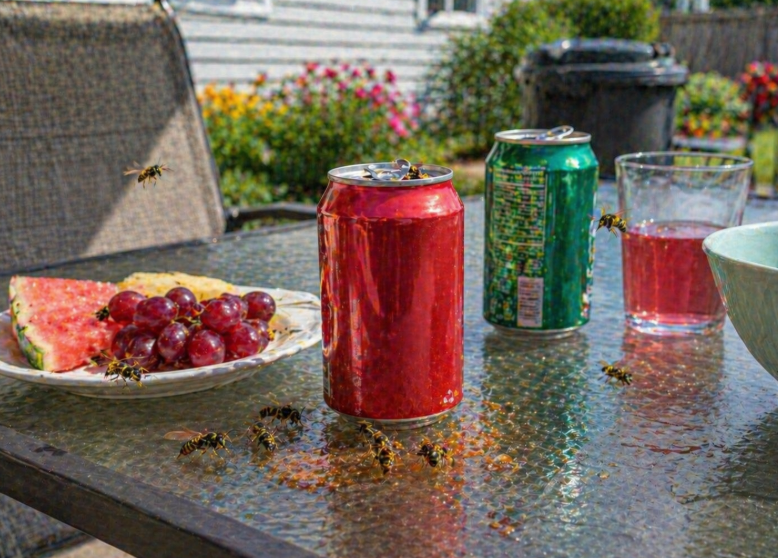
- Keep drinks covered: Bees and wasps can crawl into open cans, cups, and bottles. Use lids, covered cups, or pour drinks into clear glasses so you can see what’s inside.
- Clean spills right away: Sugary spills on tables, decks, and patio stones can attract insects fast. Wipe them before the scent spreads.
- Cover food outdoors: Use lids, mesh covers, or sealed containers when eating outside. Fruit, desserts, and grilled food are common triggers.
- Clear plates quickly: Empty plates still smell like food. Bring them inside or place them in a sealed bin after eating.
Simple rule: if it smells sweet, sticky, or meaty, it can attract bees or wasps.
Trash, Water, and Outdoor Clutter
- Seal trash bins tightly: Loose lids let smells escape and give wasps easy access to food scraps.
- Rinse bottles and cans: Soda cans, juice bottles, and food containers can hold enough residue to attract insects.
- Remove standing water: Empty plant saucers, buckets, gutters, toys, and anything that collects water after rain.
- Clear hidden spaces: Piles of wood, unused furniture, open sheds, and cluttered corners can give wasps protected areas to explore.
Example: If wasps keep showing up near one side of your yard, check for a food source, water source, or hidden nesting area before adding repellent.
Plants That Repel Bees and Wasps
Some plants may help reduce activity because of their strong scent. They will not create an invisible wall around your home, but they can support your setup when placed near the areas you use most.
Top Plants to Grow Near Patios and Doors
- Peppermint: Strong mint scent may discourage insects near seating areas, doors, and containers. Keep it in pots because mint can spread quickly in garden beds.
- Marigold: A good patio or garden-edge plant that may help discourage several insects while adding color to outdoor areas.
- Basil: Useful near outdoor dining areas because it has a strong scent and works well in containers.
- Eucalyptus: Its sharp scent may help reduce insect activity near entry points or patio corners.
- Wormwood: A strong-smelling plant sometimes used in pest-repelling garden setups, but keep it away from edible plants if needed.
Example: A few pots of mint and basil near a patio table will not solve a nest problem, but they can support better outdoor prevention when food and trash are also managed.
Plants That Also Repel Mosquitoes
- Citronella: Better known for mosquitoes, but it can still support an outdoor scent barrier when used with other plants.
- Lavender: Pleasant for people, but many insects dislike the strong scent. It works well near walkways or seating areas.
- Lemongrass: Strong citrus-like smell that may help with multiple outdoor pests when planted near patios.
- Rosemary: Useful near grills and outdoor kitchens because it has a strong scent and doubles as a cooking herb.
Simple rule: plants help most when they are placed near doors, patios, trash areas, and seating zones.
Scents That Repel Bees and Wasps Naturally
Strong scents can make certain areas less appealing to bees and wasps. The goal is not to chase every insect away from your whole yard. The goal is to discourage them from the places where you sit, eat, enter the house, or store trash.
Essential Oils That Work
- Peppermint oil: One of the most common natural options. It creates a strong scent barrier around doorways, windows, patio furniture, and problem corners.
- Clove oil: Has a sharp smell that can linger longer than lighter scents. Use it in small amounts because it is strong.
- Lemongrass oil: Fresh, strong, and useful around outdoor areas where insects keep returning.
- Tea tree oil: Strong-smelling and useful in some natural pest setups, but it should be diluted and kept away from pets when needed.
- Eucalyptus oil: A sharp scent option for outdoor surfaces, door frames, and corners.
Example: If wasps keep checking the same patio chair or railing, spray a diluted peppermint mix there every few days and after rain.
Kitchen Ingredients You Can Use
- White vinegar: Useful around trash areas, outdoor corners, and surfaces where wasps keep landing. Avoid spraying it directly on plants that may be sensitive.
- Garlic spray: Strong scent can help push insects away from certain areas, especially near garden edges or outdoor zones.
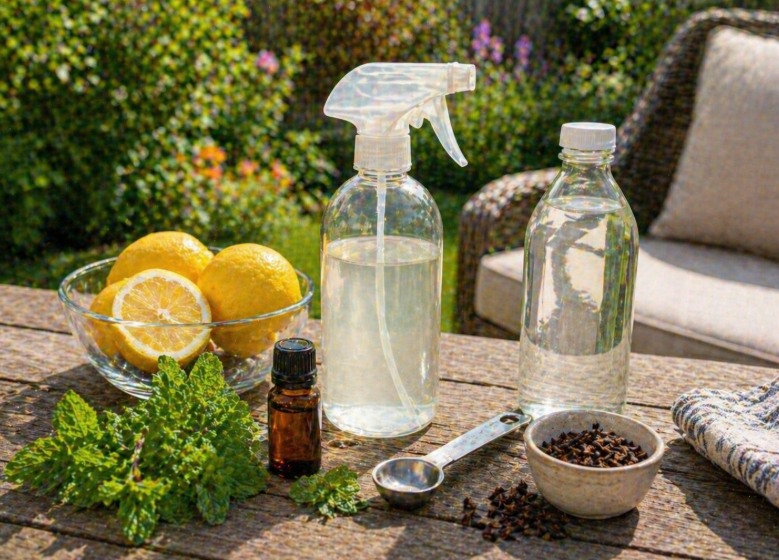
- Lemon and cloves: A simple table method for short-term outdoor meals. It helps create a strong scent near seating areas.
- Cucumber peels: Sometimes used as a mild deterrent, but it works best as a support method, not a main fix.
Simple rule: strong smells help, but they work better after food, water, and trash problems are handled.
DIY Natural Sprays to Repel Bees and Wasps
A homemade spray can help protect small problem areas. It works best on surfaces, entry points, trash areas, and outdoor furniture. It does not work well if you are trying to fix a nest or heavy wasp activity.
Essential Oil Spray Recipe
- Mix the spray: Add 1 cup of water, 10 to 15 drops of peppermint oil, and a few drops of dish soap to a spray bottle. The soap helps the mixture stick lightly to surfaces.
- Use it in target areas: Spray door frames, window edges, patio chairs, railings, and corners where bees or wasps keep showing up.
- Reapply often: Natural sprays fade outside. Reapply every few days, after rain, or after cleaning the surface.
- Avoid direct contact with insects: Use the spray as a barrier, not as a way to attack bees or wasps.
Example: If wasps keep landing near your back door, spray the door frame and nearby corners, then remove any food or trash scent nearby.
Vinegar-Based Repellent Method
- Mix equal parts vinegar and water: This creates a strong-smelling spray for outdoor problem zones.
- Use near trash and hard surfaces: Spray around bins, patio edges, outdoor corners, and areas where activity repeats.
- Avoid delicate surfaces first: Test a small spot before spraying on stone, painted wood, or metal.
- Do not use around flowers you want bees to visit: Vinegar can affect plants and may discourage pollinators in garden areas.
Simple rule: use vinegar around problem surfaces, not around plants you want to protect.
Can You Use Natural Bee and Wasp Repellent on Skin?
Be careful here.
Natural does not always mean safe for skin. Essential oils are strong and can irritate skin if applied directly.
- Dilute essential oils first: Mix oils like peppermint or lemongrass with a carrier oil before skin use.
- Use products labeled for skin: A store-bought natural bug repellent made for skin is safer than guessing with homemade mixes.
- Patch test first: Apply a small amount to one area and wait to see if your skin reacts.
- Avoid sensitive areas: Keep oils away from eyes, cuts, lips, and irritated skin.
- Do not rely on skin repellent alone: If bees or wasps are attracted to food nearby, body repellent will not solve the main issue.
Example: If you are eating outside, covering food and drinks will help more than putting oil on your skin.
📖 You May Also Like This “Pest Control” Article: 7 Ways to Get Rid of Mouse Urine Smell
Citronella Has Limited Effect on Bees and Wasps
Citronella is popular, but it is not the strongest natural option for bees and wasps.
It is mainly known for mosquitoes. With bees and wasps, it may help a little by masking scents, but it will not stop repeated activity if food, trash, water, or nests are nearby.
- Helpful as support: Citronella can be part of your outdoor setup, especially near seating areas.
- Not enough by itself: It will not solve strong wasp activity or repeated visits to food and trash.
- Better with other methods: Use it with covered food, sealed trash, peppermint spray, and good cleanup habits.
- Works best in small spaces: It may help around a table or patio corner, not across a large yard.
Simple rule: citronella can help, but don’t make it your main bee and wasp plan.
Some Natural Methods Help, Others Don’t
A lot of home remedies sound clever, but not all of them work in real life.
The best natural methods target the reasons bees and wasps show up: food, water, smell, shelter, and nesting.
Methods That May Help a Little
- Essential oil sprays: Helpful around targeted areas like door frames, patios, trash bins, and windows when reapplied regularly.
- Repellent plants: Useful near patios, doors, and outdoor seating, especially when paired with cleanup habits.
- Vinegar around bins: Can help reduce activity around trash areas, especially after the bins are cleaned.
- Covered food and drinks: Simple, but one of the most effective habits during outdoor meals.
- Removing standing water: Helps reduce visits during dry weather when insects search for water.
Methods That Don’t Work Well
- Coin-in-a-bag tricks: These may look interesting, but they do not reliably change bee or wasp behavior.
- Foil strips: Reflective strips may move in the wind, but they usually do not fix the reason insects are there.
- Random hanging objects: Items meant to “confuse” insects rarely work if food, water, or nesting spots are still available.
- One-time sprays: Natural sprays fade quickly outdoors, so one application will not protect an area for long.
Simple rule: if a method does not remove the attractant or create a real barrier, it probably will not do much.
How to Stay Safe Around Bees and Wasps
Most bees and wasps do not sting unless they feel threatened, trapped, or disturbed.
The way you react matters.
- Stay calm: Fast arm movements can make wasps more defensive. Move slowly and step away.
- Do not swat: Swatting can turn a small problem into a sting risk.
- Cover drinks: Wasps can crawl into cans or cups, which creates a painful surprise.
- Wear neutral colors outdoors: Bright colors and strong fragrances may attract more attention.
- Keep distance from nests: If insects are flying in and out of one spot, do not inspect it closely.
- Teach kids to move away calmly: Running, screaming, or waving hands can increase risk.
Example: If a wasp lands near your plate, calmly step back and remove the food source instead of trying to hit it.
When Natural Methods Aren’t Enough
Natural methods are helpful for prevention and light activity.
But if bees or wasps are nesting near your home, the problem is different. Repellents may reduce activity for a moment, but they will not remove the colony.
Watch for these signs:
- Visible nest: A paper-like nest, ground nest, wall opening, or repeated entry point needs caution.
- Heavy traffic in one spot: Insects flying in and out of the same area usually means there is a nest nearby.
- Increasing numbers: If activity grows each week, the problem may be established.
- Aggressive behavior: Wasps acting defensive near a doorway, shed, roofline, or deck can signal a nest.
- Activity inside walls: Buzzing sounds or insects entering gaps around siding, vents, or rooflines should not be ignored.
Simple rule: natural repellents are for prevention and light activity. Nests need a safer, more direct solution.
Frequently Asked Questions
What Smell Do Bees and Wasps Hate the Most?
Bees and wasps tend to avoid strong scents like peppermint, clove, lemongrass, vinegar, and garlic. These smells can make small areas less attractive, especially near doors, patios, and trash bins. They work best after you remove food, sugar, and water sources first.
What Repels Bees Instantly?
Nothing natural works like an instant permanent fix. Peppermint spray or vinegar scent may push bees away from a small area for a short time, but they can return if food, water, or flowers are nearby. For lasting results, remove the attractant first.
What Is the Best Homemade Wasp Repellent?
A simple peppermint oil spray is one of the easiest options. Mix water, peppermint oil, and a few drops of dish soap in a spray bottle. Use it around doors, windows, patio furniture, and trash areas. Reapply after rain or cleaning.
How Do You Keep Bees Away Naturally?
Start by removing what attracts them. Keep food covered, wipe sugary spills, seal trash, and remove standing water. Then use natural support methods like peppermint spray, clove scent, vinegar near bins, and repellent plants near patios or doors.
Does Vinegar Keep Wasps Away?
Vinegar may help discourage wasps around trash bins, outdoor corners, and hard surfaces because of its strong smell. It is not a complete solution, though. If food scraps, sugary residue, or a nest is nearby, vinegar alone will not stop the activity.