

Your carpet smells off, looks dull, or has a fresh spot you want to fix before it settles in.
So you grab baking soda and wonder how to clean carpet with baking soda?
That’s where most people get stuck.
Baking soda can help with odor, light moisture, and some surface stains, but it is not magic. It will not deep-clean years of grime, disinfect the carpet, or remove every stain by itself.
In this guide, you’ll learn how to use baking soda properly for odor, stains, and spills, and how to remove it fully so your carpet actually looks clean again.
Key Takeaways
- Baking soda works best for carpet odor, light moisture, and fresh surface stains, but it does not replace deep carpet cleaning.
- The right process matters: vacuum first, sprinkle evenly, let it sit long enough, then vacuum slowly to remove residue properly.
- For stronger odors like pet smells, urine, or vomit, leave baking soda on the carpet for several hours or overnight before vacuuming.
- Baking soda works better when paired with vinegar or hydrogen peroxide for certain stains, but avoid soaking the carpet.
- Blot stains instead of scrubbing, because rubbing can push spills deeper into the carpet fibers and padding.
- Always remove baking soda fully after cleaning, or leftover powder can leave a dull, gritty residue in the carpet.
Can You Clean Carpet With Baking Soda?
Yes, you can clean carpet with baking soda, but it depends on what you mean by “clean.”
Baking soda is great for odor, light moisture, and fresh surface messes. It helps absorb smells and loosen some grime, but it is not a full deep-cleaning replacement.
- Good for carpet odor: Baking soda absorbs smells from pets, food, smoke, dampness, and everyday foot traffic.
- Helpful for fresh spills: It can soak up light moisture before the spot settles deeper.
- Useful for light stains: It may help lift mild marks when used with water, vinegar, or hydrogen peroxide.
- Not a disinfectant: Baking soda does not fully sanitize carpet or kill germs by itself.
- Not enough for deep grime: Old dirt, heavy stains, and soaked-in messes usually need stronger cleaning.
Simple rule: baking soda freshens carpet best, but it does not replace proper deep cleaning.
How to Clean Carpet With Baking Soda
This is where people usually make the mistake. They sprinkle baking soda everywhere, vacuum too soon, then wonder why nothing changed.
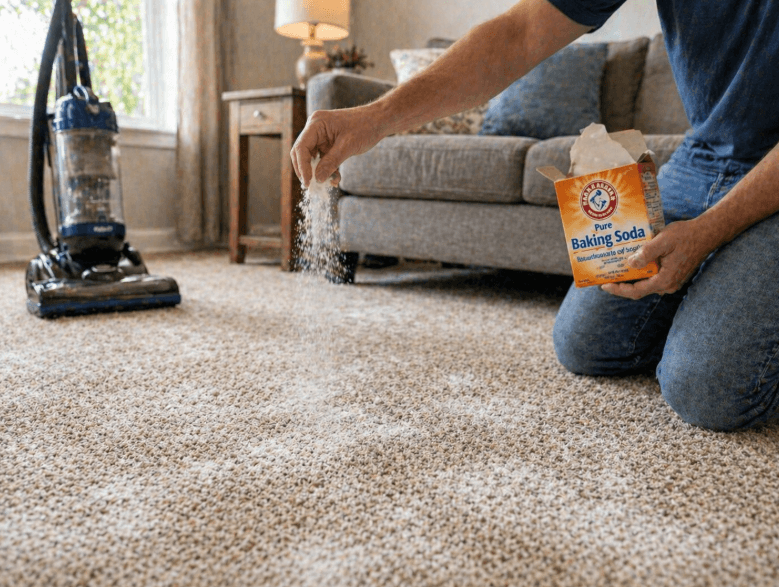
Use it with a clear purpose.
- Vacuum the carpet first: Remove dust, crumbs, and loose dirt before adding baking soda.
- Sprinkle baking soda evenly: Cover the smelly or stained area with a light, even layer.
- Let it sit long enough: Give it at least 30 minutes for light odor, longer for stronger smells.
- Work it in lightly: Use a soft brush only if the carpet needs extra help.
- Vacuum slowly: Go over the area more than once so powder does not stay trapped.
- Repeat if needed: Strong smells or stains may need a second round.
Example: If a carpet smells musty after a humid week, sprinkle baking soda, let it sit overnight, then vacuum slowly the next morning.
Simple rule: sprinkle, wait, vacuum slowly.
How to Clean Carpet With Baking Soda (Vinegar, Hydrogen Peroxide)
Baking soda can work with vinegar or hydrogen peroxide, but you should use them for different carpet problems.
Use vinegar for light odor and mild stains. Use hydrogen peroxide more carefully for lighter carpet stains, since it may fade some carpet colors.
- For baking soda and vinegar: Sprinkle baking soda over the spot first, then lightly mist it with white vinegar. Let the fizz settle, blot with a clean cloth, and let the carpet dry fully.
- For baking soda and hydrogen peroxide: Mix baking soda with a small amount of hydrogen peroxide to make a paste. Apply it to the stain, wait briefly, blot, rinse lightly, and dry the area.
- Test first: Always test vinegar or hydrogen peroxide on a hidden carpet area before using it on the visible spot.
- Don’t oversoak the carpet: Too much liquid can push the stain or smell deeper into the padding.
Simple rule: use vinegar for odor and light stains, and use hydrogen peroxide carefully for lighter carpet stains only after testing.
How to Get Rid of Carpet Odor With Baking Soda
Carpet odor usually sticks around because smells get trapped in the fibers, not just on the surface.
That’s why spraying fragrance rarely fixes it. You need something that absorbs the smell.
- Use enough baking soda: Sprinkle a full, even layer over the smelly area.
- Let it sit longer for a strong odor: Leave it for several hours or overnight if the smell is deep.
- Vacuum slowly and thoroughly: Quick vacuuming can leave powder behind in the fibers.
- Repeat for pet or food smells: Strong odors may need more than one treatment.
- Keep the carpet dry: Moisture can bring odors back, even after cleaning.
- Open windows or use a fan: Airflow helps the carpet dry and freshen faster.
Example: If the carpet smells like pets, don’t just sprinkle and vacuum after five minutes. Let the baking soda sit overnight so it has time to absorb the odor.
Simple rule: the stronger the smell, the longer baking soda needs to sit.
How Long to Leave Baking Soda on Carpet for Smell
- Light odor: Leave baking soda on the carpet for 30 minutes to 1 hour if the smell is mild. For stronger smells like pets, smoke, urine, or vomit, leave it for several hours or overnight so it has time to absorb odor before vacuuming slowly.
Why Put Baking Soda on Carpet Before Vacuuming?
- Better odor control: Putting baking soda on carpet before vacuuming gives it time to absorb trapped smells from the fibers. If you vacuum right away, it won’t do much. Let it sit first, then vacuum slowly so the powder and odor come out together.
📖 You May Also Like This “Cleaning” Article: How to Clean Grout on Tile Floor?
How to Remove Carpet Stains With Baking Soda
Baking soda can help with some carpet stains, but it works best when the stain is fresh or not deeply set.
The key is to lift the stain slowly instead of rubbing it deeper.
- Blot the stain first: Remove as much liquid or residue as possible before adding baking soda.
- Sprinkle baking soda over the spot: Cover the stained area with an even layer.
- Add a small amount of water or vinegar: Lightly dampen the baking soda so it can loosen the stain.
- Let it sit: Give it 15 to 30 minutes for light stains, longer for tougher spots.
- Blot, don’t scrub: Press gently with a clean cloth to lift the stain.
- Vacuum once dry: Remove all leftover powder so it doesn’t leave residue.
Example: If coffee spills on the carpet, blot first, add baking soda, lightly mist with water, wait, then blot again.
Simple rule: fresh stains respond better than old stains.
How to Clean Urine, Vomit, Blood, or Soot From Carpet With Baking Soda
Different messes need different handling. Baking soda helps absorb odor and moisture, but you still need the right first step.
Don’t treat every stain the same way.
- Urine: Blot first, then use baking soda to absorb moisture and help reduce smell.
- Vomit: Remove solids first, blot the area, then sprinkle baking soda to absorb odor.
- Blood: Use cold water only, then apply baking soda paste gently. Avoid hot water because it can set the stain.
- Soot: Vacuum dry soot first before adding anything wet, or it may smear deeper.
- Pee smell: Let baking soda sit longer, often overnight, before vacuuming.
- Repeat if needed: Strong odors may need more than one round.
Example: For vomit, don’t start with liquid cleaner. Lift the mess, blot moisture, add baking soda, wait, then vacuum.
Simple rule: remove the mess first, then treat the odor.
📖 You May Also Like This “Cleaning” Article: How to Clean Puke Out of Carpet?
How to Remove Baking Soda From Carpet
Baking soda helps clean carpet, but only if you remove it properly afterward. If it stays trapped in the fibers, it can leave a dusty feel or dull residue.
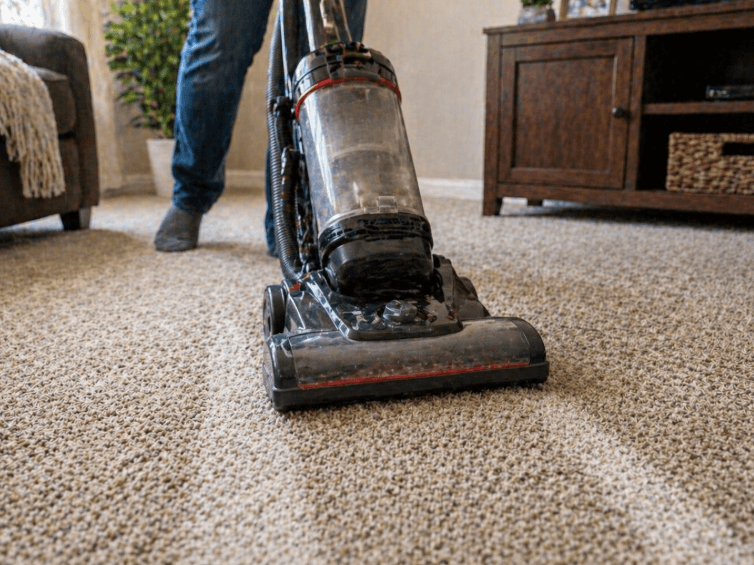
- Let it dry fully: Wet baking soda is harder to remove and can clump in the carpet.
- Vacuum slowly: Move the vacuum in several directions to pull powder from deeper fibers.
- Empty the vacuum if needed: Baking soda fills the canister or bag quickly.
- Repeat vacuuming: One pass usually isn’t enough on thick carpet.
- Use a brush for clumps: Loosen dried spots gently before vacuuming again.
- Check the carpet after: Run your hand over the area to feel for leftover powder.
Example: If the carpet still feels gritty after vacuuming, go over it slowly again instead of adding water right away.
Simple rule: dry first, loosen second, vacuum slowly.
How to Remove Baking Soda From Carpet Without a Vacuum
- Use a stiff brush and dustpan: Let the baking soda dry first, then brush it gently toward one side and collect it with a dustpan. For leftover powder, blot with a slightly damp cloth, then dry the carpet fully so residue doesn’t stay behind.
How to Remove Baking Soda Residue or Stains From Carpet
- Use a damp cloth, not soaking water: If baking soda leaves white residue, blot the area with a clean damp cloth, then dry it with towels. Repeat lightly if needed. Avoid oversaturating the carpet because wet powder can sink deeper and become harder to remove.
Frequently Asked Questions
Does Baking Soda Stain Carpet?
Usually, baking soda does not stain carpet when used dry and vacuumed properly. But if it mixes with moisture or colored residue, it can leave a white powdery mark that needs rinsing and drying.
Does Baking Soda Bleach Carpet?
No, baking soda does not bleach carpet like bleach or peroxide can. It is generally safe for most carpet colors, but always test a hidden spot first, especially on dark or delicate carpet.
Does Baking Soda Disinfect Carpet?
No, baking soda does not disinfect carpet. It helps absorb odor and moisture, but it does not kill germs or bacteria properly. For disinfecting, you need a carpet-safe sanitizing cleaner.
Does Baking Soda Kill Dust Mites in Carpet?
Baking soda may help freshen carpet, but it does not reliably kill dust mites. Vacuuming with a HEPA filter, washing fabrics, and reducing humidity are better ways to manage dust mites.
Does Baking Soda Dry Carpet?
Yes, baking soda can help absorb light moisture from carpet. It is useful for damp spots, but it will not dry a soaked carpet fully. Use towels, airflow, and fans too.