


Your tile floor still looks dirty even after mopping, and the problem is usually the grout. That’s why learning how to clean grout on tile floor makes such a big difference.
Grout holds dirt, grease, and residue that regular cleaning doesn’t remove. So no matter how much you mop, the floor can still look dull.
In this guide, you’ll learn what to use, how to clean grout step by step, and how to keep it from getting dirty again.
Key Takeaways
- Dirty grout is often why tile floors still look dull after mopping, because grime settles into the grout lines.
- Grout traps dirt, grease, soap residue, moisture, and debris, so regular mopping usually cannot clean it deeply.
- Choose the cleaner based on the mess, such as dish soap for light dirt, baking soda for dingy grout, peroxide for stains, or a degreaser for kitchen buildup.
- The best cleaning order is simple: vacuum first, apply cleaner, let it sit, scrub the grout lines, rinse well, and dry the floor.
- Steam cleaning can help remove deep grime from textured grout without relying on harsh chemicals.
- Preventing buildup is the easiest long-term fix: sweep often, wipe spills quickly, use clean mop water, dry bathroom floors, and seal grout when needed.
What to Use to Clean Grout on Tile Floor?
Most grout doesn’t need harsh chemicals first. It needs the right cleaner for the type of dirt you’re dealing with.
Start simple, then move stronger only if needed.
- Warm water + mild dish soap: Good for light dirt, daily buildup, and routine cleaning.
- Baking soda paste: Helpful for dingy grout and surface stains. Mix with a little water.
- White vinegar (sealed grout only): Useful for soap residue and grime. Avoid on natural stone nearby.
- Hydrogen peroxide: Good for tougher stains and brightening light grout.
- pH-neutral tile cleaner: Safe, regular option for most floors.
- Soft grout brush or old toothbrush: Helps clean lines without damaging grout.
- Steam cleaner: Strong option for deep grime without heavy chemicals.
Simple rule: match the cleaner to the mess, not the strongest bottle on the shelf.
How to Clean Grout on Tile Floor
This is where most people waste effort. They start scrubbing right away without giving the cleaner time to loosen the dirt first.
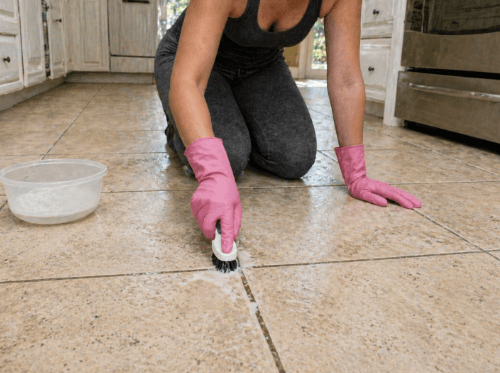
Use this order instead for better results.
Step 1: Vacuum or Sweep First
Remove loose dirt, dust, and grit from the tile floor. This keeps you from rubbing debris deeper into the grout lines.
Step 2: Choose the Right Cleaner
Pick the cleaner based on the type of dirt:
- Warm water + mild dish soap: Good for light dirt and routine cleaning.
- Baking soda + water paste: Good for dull or dirty grout.
- Hydrogen peroxide + baking soda: Better for stained white grout.
- Vinegar: Use carefully on sealed ceramic tile only. Avoid marble, stone, or damaged grout.
Step 3: Apply Cleaner and Let It Sit
Spread the cleaner over the grout lines and let it sit for 5 to 10 minutes. This helps loosen dirt before scrubbing.
Step 4: Scrub the Grout Lines
Use a soft grout brush or old toothbrush. Scrub in short back-and-forth motions along the grout lines.
Step 5: Rinse Thoroughly
Wipe the area with clean water so leftover cleaner does not stay in the grout. Natural cleaners can still leave residue if they are not rinsed well.
Step 6: Dry the Floor
Use a towel or dry mop to remove moisture from the grout lines. This helps prevent water marks and new buildup.
Step 7: Repeat Only on Stained Spots
If a few areas still look dirty, treat only those spots again. Don’t over-scrub the whole floor if most of it is already clean.
Example: Greasy grout near the stove may need a second pass, but the rest of the floor may only need one light cleaning.
Simple rule: soak first, scrub second, rinse well, and dry the grout after cleaning.
How to Steam Clean Grout and Floor Tile
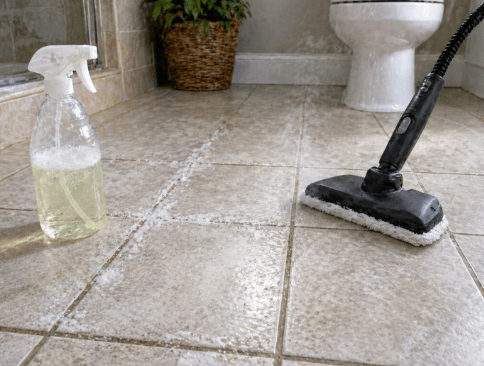
Steam cleaning works well when grime is deep in textured grout lines.
- Use the grout attachment: Narrow nozzles direct steam into lines better than wide heads.
- Move slowly: Give steam time to loosen trapped dirt.
- Wipe immediately: Lift softened grime before it settles again.
- Test one area first: Older or damaged grout may not handle high heat well.
- Dry afterward: Remove leftover moisture from grout joints.
Good option for bathrooms where soap film and moisture buildup are common.
📖 You May Also Like This “Cleaning” Article: How to Clean Puke Out of Carpet?
How to Clean Floor Tile Grout Without Scrubbing
Sometimes the issue isn’t hard dirt. It’s dried residue sitting on the surface. That means you may not need aggressive scrubbing at all.
Use cleaners that do the work for you.
- Spray and let it dwell: Apply grout cleaner and leave it for 10 to 15 minutes so the buildup softens.
- Use a steam cleaner: Heat can loosen grime with minimal brushing.
- Try oxygen-based cleaners: These help lift dirt while sitting on the grout.
- Use a microfiber mop after soaking: Good for wiping away loosened residue.
- Repeat stubborn spots only: Target the bad areas instead of redoing the whole floor.
- Rinse well afterward: Cleaner left behind attracts more dirt later.
Simple rule: more soak time often means less scrub time.
How to Clean Stained Grout on Tile Floor
Stains are different from normal dirt. They’ve soaked in, so quick mopping won’t fix them.
You need to lift the stain, not just clean the surface.
- Identify the stain first: Grease, rust, mildew, and food stains respond differently.
- Use baking soda paste for general stains: Let it sit before brushing lightly.
- Use hydrogen peroxide for light grout: Helpful for yellowing or dark spots.
- Use a degreaser in kitchens: Cooking oils often darken grout near stoves.
- Repeat in layers: Old stains may need several treatments, not one harsh cleaning.
- Consider regrouting or color sealant: Deep permanent stains sometimes need restoration.
Example: Bathroom mildew may lift in one cleaning, while years-old kitchen grease can take multiple rounds.
Simple rule: stains need patience, not brute force.
How to Clean White, Dark, or Colored Grout on Tile Floor
Different grout colors need different care. Using the wrong method can fade or discolor them.
Clean based on grout color, not one-size-fits-all advice.
- White grout: Use baking soda or peroxide to brighten dingy lines safely.
- White grout stains show faster: Clean regularly before buildup turns yellow or gray.
- Dark grout: Use pH-neutral cleaner to avoid fading or haze.
- Colored grout: Avoid bleach or harsh acids that can strip pigment.
- Test hidden areas first: Especially with older grout or strong cleaners.
- Dry after cleaning: Wet residue can leave marks on darker grout shades.
Example: What brightens white grout may damage colored grout, so always match the cleaner to the grout type.
Simple rule: light grout needs brightening, colored grout needs protection.
📖 You May Also Like This “Cleaning” Article: How to Clean Carpet with Baking Soda?
How to Clean Kitchen or Bathroom Tile Floor Grout
Kitchen and bathroom grout gets dirty for different reasons. Kitchens collect grease and food residue. Bathrooms deal with soap film, moisture, and mildew.
Use the right approach for the room.
- Kitchen grout needs degreasing: Use a mild degreaser or dish soap mix near stoves and prep areas.
- Bathroom grout needs mildew control: Use peroxide or bathroom-safe cleaner for damp dark spots.
- Old bathroom grout needs soaking time: Let cleaner sit longer before brushing.
- Focus on traffic zones: Sink, toilet, shower entry, and stove areas get dirty fastest.
- Rinse thoroughly: Leftover cleaner attracts more grime later.
- Dry bathroom grout after cleaning: Moisture left behind can help mildew return.
Example: Sticky kitchen grout near the stove usually needs grease removal, while bathroom grout often needs moisture treatment first.
Simple rule: grease in kitchens, moisture in bathrooms.
How to Clean Grout on Ceramic, Porcelain, or Marble Tile Floor
The grout may be the target, but the tile type still matters. Some surfaces handle stronger cleaners, others do not.
Protect the tile while cleaning the grout.
- Ceramic tile: Usually handles standard grout cleaners well. Great for routine scrubbing methods.
- Porcelain tile: Durable and low-porosity, but rinse well to avoid cleaner film.
- Marble tile: Avoid vinegar, bleach, or acidic cleaners that can etch the stone.
- Use pH-neutral products on natural stone: Safest choice around marble or travertine.
- Use soft brushes only: Metal or stiff brushes can scratch tile edges.
- Test first in a hidden spot: Especially on polished stone surfaces.
Example: Vinegar may work near ceramic grout but can permanently dull marble.
Simple rule: clean the grout, but respect the tile surface.
How to Keep Floor Tile Grout Clean
Cleaning grout once is helpful. Keeping it clean is what saves you time later.
Most dirty grout comes from buildup, not one sudden mess.
- Sweep or vacuum often: Dirt particles settle into grout lines quickly.
- Mop with clean water: Dirty mop water can darken grout over time.
- Wipe spills fast: Coffee, grease, sauce, and soap stains set quickly.
- Use entry mats: Less outside dirt means cleaner grout lines.
- Dry bathroom floors: Reduces mildew and moisture staining.
- Seal grout when recommended: Sealed grout resists stains and absorbs less dirt.
Example: A kitchen floor cleaned weekly stays manageable, while months of buildup become a scrubbing project.
Simple rule: light maintenance beats deep cleaning every time.